
The Economies of Trust

As the year draws to a close, we naturally turn more reflective. In these quieter moments, patterns become visible which were harder to witness while we were buried in the hustle of execution.
Across industries, one theme continues to surface with clarity: despite unprecedented access to data, tools, and expertise, organizations are struggling with disengagement, burnout, and erosion of confidence. Strategies are in place. Talent is strong. Yet something essential often feels brittle.
What is breaking is not performance capacity.
It is trust. Trust forms social capital, an essential, often overlooked part of an economy that supports everything else.
We are entering a time period that can best be described as the economies of trust. In this emerging reality, trust functions as a form of social capital, shaping outcomes more powerfully than financial investment, technology, or operational scale. It compounds quietly when present, and depletes rapidly when neglected.
Unlike traditional assets, trust cannot be optimized through brute force, nor restored through shallow rhetoric. It is built slowly, relationally, and through consistent leadership behaviour over time.
Trust as the Northern Star
For years, trust was treated as a cultural by-product, something assumed to emerge if vision and values were articulated clearly enough or if people were simply hired well. That assumption no longer holds. Trust encourages entrepreneurship, trade, and innovation because people are more willing to collaborate and take risks.
In complex, high-pressure environments, trust operates as invisible infrastructure. It determines whether information moves seamlessly or stalls. Whether risks are surfaced early or concealed. Whether people contribute their full intelligence or conserve energy for self-protection.
When trust is present, organizations are more resilient and adapt more quickly. Decisions are made closer to the work. Conflict is navigated without fear. Accountability strengthens without excessive oversight.
When trust is absent, even the most capable teams slow down. Meetings become dreaded or performative. Innovation narrows. People comply, but they do not commit.
The cost of distrust rarely appears immediately on financial statements. It shows up first in exhaustion, disengagement, and quiet exits.
From the Attention Economy to the Trust Economy
Much has been written about the attention economy, the cognitive overload leaders and professionals face in a stressful.. always-on world. Yet attention itself is not the root problem.
Attention follows trust.
People pay attention when they feel psychologically safe enough to engage fully and think clearly. They engage when they trust that their honesty will be celebrated. They bring forward ideas when they believe their perspective is valued.
Without trust, attention fragments. Energy is spent managing status and impressions rather than solving problems. The organization becomes busy, but not effective.
This is where leadership quality becomes economically consequential.
Mindful Leadership as a Strategic Capacity
Mindful Leadership is often misunderstood as a personal wellness practice, something optional or peripheral. In reality, it is a strategic capacity.
At its core, Mindful Leadership strengthens a leader’s ability to regulate under pressure, distinguish signal from noise, and respond thoughtfully rather than reactively. Neurologically, this capacity allows leaders to access higher-order thinking rather than default stress responses.
Leaders who cultivate this internal steadiness create external stability. They slow down and center just enough for clarity and generous reciprocity to emerge. They model presence, which signals safety to others. Over time, this becomes the norm.
Trust grows not through perfection, but through coherence.
Trust Compounds, Distrust Accelerates
Trust is a form of social license and it behaves like capital.
When invested consistently, it compounds. Teams recover faster from stress and disruption. Change initiatives land with less resistance. Leadership credibility strengthens over time.
Distrust also compounds, but more aggressively. Small misalignments become systemic. Cynicism spreads. The emotional cost of work increases until performance inevitably follows. The silent cost of recovering from micro-aggressions that take away from the executive functioning of our prefrontal cortex while we are switching gears from the fight or flight mode.
Most organizational failures are not caused by flawed strategy. They result from eroded relational conditions that make execution unsustainable.
The Coaching Profession and the Trust Question
So, who is there to support all of this? As trust becomes a defining economic force, it is necessary to address an important truth: the coaching profession itself is largely unregulated.
Today, the title “coach” spans an enormous range, from shamanic healers to executive consultants to motivational speakers. Many of these practitioners offer valuable work. However, they are not all practising the same discipline.
When consulting, teaching, therapy-adjacent work, and spiritual guidance are all labelled as coaching, trust erodes.
Professional coaching, as defined by the International Coaching Federation, is not about advice-giving or directing outcomes. It is a structured, ethical, and psychologically informed process that supports individuals in generating their own clarity, insight and direction.
Neurologically, effective coaching creates the conditions for integration rather than dependency. The coach does not impose a path. They facilitate awareness, presence, and reflection so the client’s internal intelligence becomes accessible.
This distinction matters deeply in the trust economy.
Leaders do not need more instruction. They need a safe space to think, to integrate complexity, and to reconnect with their own agency.
Why Credibility Matters in Coaching
Trust cannot be claimed in coaching (or in business). It must be earned.
I have built my coaching practice deliberately, grounded in formal training, lived leadership experience, and ethical clarity. My background includes senior executive roles in human resources and organizational strategy, an MBA rooted in applied systems thinking, and formal education in psychology.
I have worked inside organizations where decisions carried real human, financial, and reputational consequences. I understand the pressures leaders face not theoretically, but experientially.
Coaching, in my work, is not a rebranded form of consulting, but a compliment to the good work we are already doing at Elevate Talent Solutions. It is a distinct practice grounded in respect for client autonomy, evidence-informed frameworks, and rigorous professional standards.
Trust Is Also Relational
Beyond credentials, trust is felt.
My approach is naturally caring, supportive, and deeply present. I listen carefully, hold space without judgment, and offer clarity without agenda. Clients often describe feeling comfortable enough to think out loud, to question long-held assumptions, and to creatively explore new possibilities without pressure to perform.
That safety and trust is not accidental. It is intentional.
In an environment saturated with noise, presence becomes leadership.
Leadership for What Comes Next
As one year closes and another approaches, leaders are not simply planning strategy. They are recalibrating how they lead.
The future will not reward louder leadership or faster decision-making alone. It will reward leaders who can hold complexity, build trust, and create environments where people can think clearly and act with integrity.
Trust is no longer a cultural aspiration.
It is an economic reality.
And Mindful Leadership is one of the core most effective ways to invest in it.
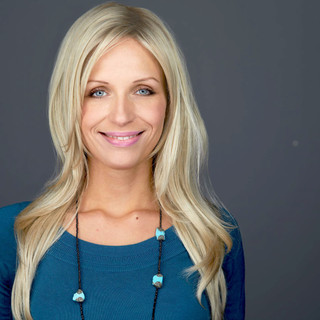
About Lina Bil Coaching
Lina Bil Coaching works with leaders and organizations ready to move beyond performative leadership and toward sustainable, trust-centred impact. Through Mindful Leadership development and Executive Coaching, this work supports leaders in building the internal capacity required to lead with clarity, integrity, and emotional intelligence.
The future of leadership is not louder.
It is more grounded.
And it is already emerging.
Launching January 1, 2026.


Comments